


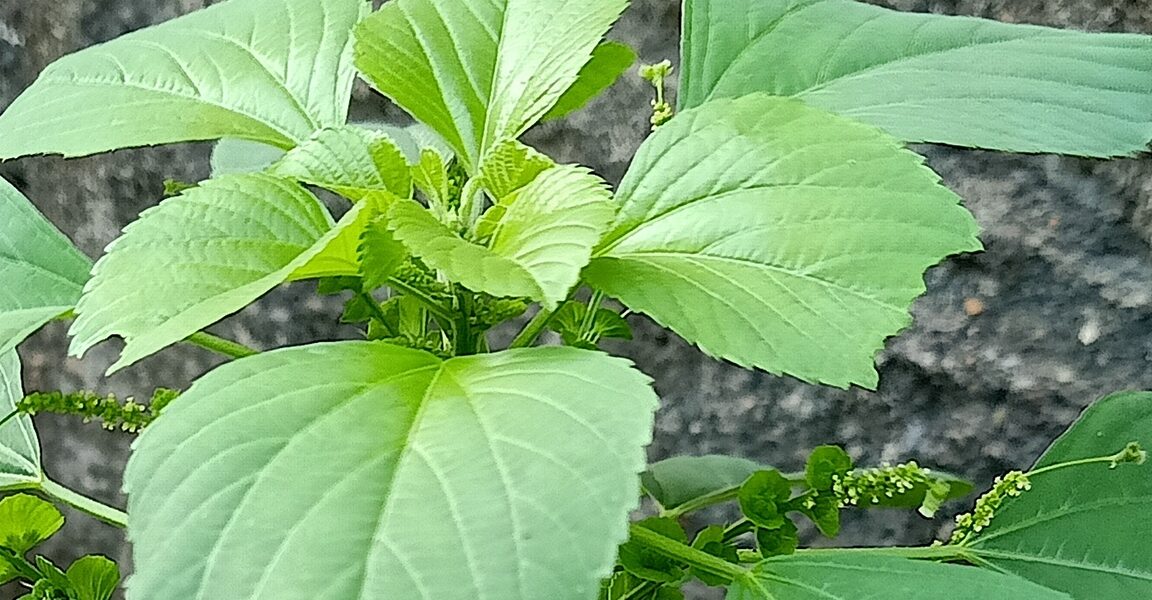
Asian Copperleaf Spreading in Iowa and Illinois: Tips for Scouting
Asian copperleaf, a late-emerging, shade tolerant weed, has now been confirmed in Illinois and Iowa.
4 Min Read
Despite the dynamic nature of weed communities, the discovery of new species is uncommon and can spell trouble for growers. This year, farmers in Iowa and Illinois should keep their eyes peeled for an emerging weed threat: Asian copperleaf.
Discovered in the Midwest in 2016, Asian copperleaf has since been found in corn and soybean fields in at least 11 counties in Iowa and Illinois. It’s unclear how the plant was introduced, but farmers have seen it emerge in dense patches late in the season. While other weed species typically stop growing once corn and soybeans reach canopy closure, Asian copperleaf is shade tolerant and thrives under the canopy.
Should I Be Concerned About Asian Copperleaf?
A USDA Risk Analysis found that Asian copperleaf shows no strong invasive or weediness characteristics, but researchers still classified 57% of simulations as high risk due to a high amount of uncertainty — in other words, there is still a lot to learn about this weed.
We do know that Asian copperleaf threatens row crop yields in its native range, with high densities of the weed leading to yield losses of nearly 30%. To make matters worse, it has developed resistance to several herbicide groups, raising concerns that it could quickly do the same in the U.S.
As with any weed, we would expect some yield loss if it’s left unchecked. This particular species has definitely caused yield loss in its native range and is certainly something that we want to keep an eye out for.
“As with any weed, we would expect some yield loss if it’s left unchecked,” says Jesse Grote, an Iowa-based agronomy service representative at Syngenta. “This particular species has definitely caused yield loss in its native range and is certainly something that we want to keep an eye out for.”
How to Scout and Identify Asian Copperleaf
Scouting this weed can be tricky. Grote recommends scouting in July, around the time growers look for corn rootworm, and continuing through harvest.
“Here in Iowa, growers primarily notice it at harvest since it stays below the canopy,” says Grote. “If you’re harvesting your field and come up on a weedy patch that you weren’t expecting, hop out and see if you can identify it as Asian copperleaf.”
To determine if a weed is Asian copperleaf, first rule out other spurges by breaking the stems of suspicious weeds. Unlike other common spurge species, Asian copperleaf does not have milky sap inside the stem.
From there, rule out native species like Virginia and rhombic copperleaf by examining the bracts, or leafy tissue beneath the flowers. “It really comes down to the bracts,” says Grote. “If you’re going to look for anything, the heart-shaped bracts are the one characteristic that distinguishes this from other species.”
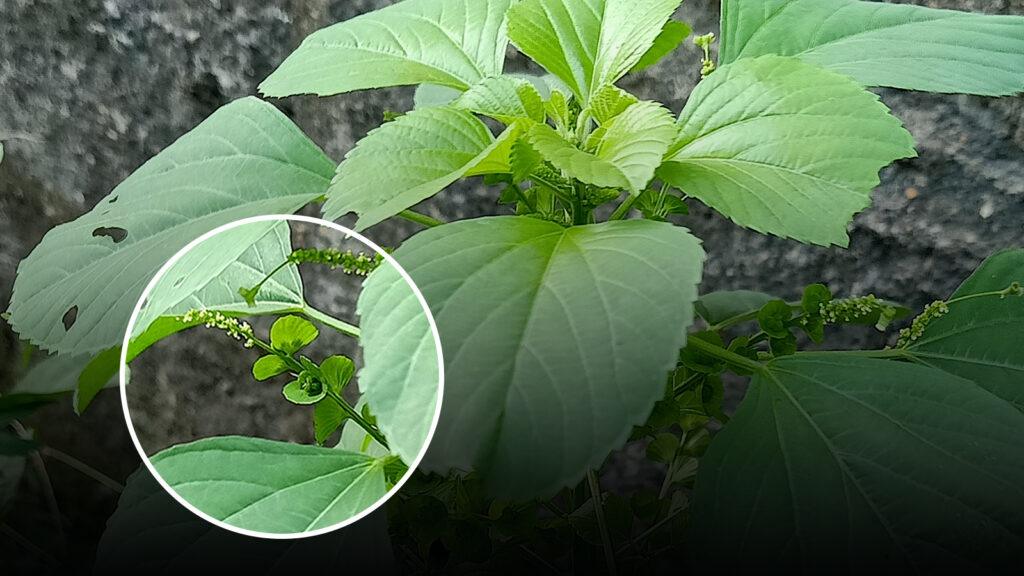
What to Do if You Find Asian Copperleaf
There are still many unknowns when it comes to managing Asian copperleaf. Following the principles of proper weed management as researchers uncover more information is critical. That means starting clean by using strong rates of residual herbicides and following up with overlapping residuals. If you do find Asian copperleaf, your primary goal should be to avoid spreading it to other fields, especially as harvest approaches.
“If you’re combining and identify Asian copperleaf that has gone to seed, be extra cautious to prevent transporting seed or anything that could potentially propagate in another field,” says Grote. Be sure to clean equipment between fields and be mindful of what’s going into the combine.
“Something to consider for this type of weed, because it’s living below the canopy and we may not find it until harvest, is a fall application of a burndown herbicide or a tillage pass to make sure it doesn’t get to seed,” says Grote. Although these methods may not be typical for the region, the extra precaution may pay off when dealing with a new threat.
Researchers are still examining the impact and spread of Asian copperleaf. If you suspect Asian copperleaf on your farm, please contact the Iowa Department of Agriculture and Land Stewardship at 515-725-1470 or Illinois Extension at 815-986-4357. Reach out to your local Syngenta retailer or representative for more information about tackling tough and emerging weed threats.

RECOMMENDED FOR YOU