


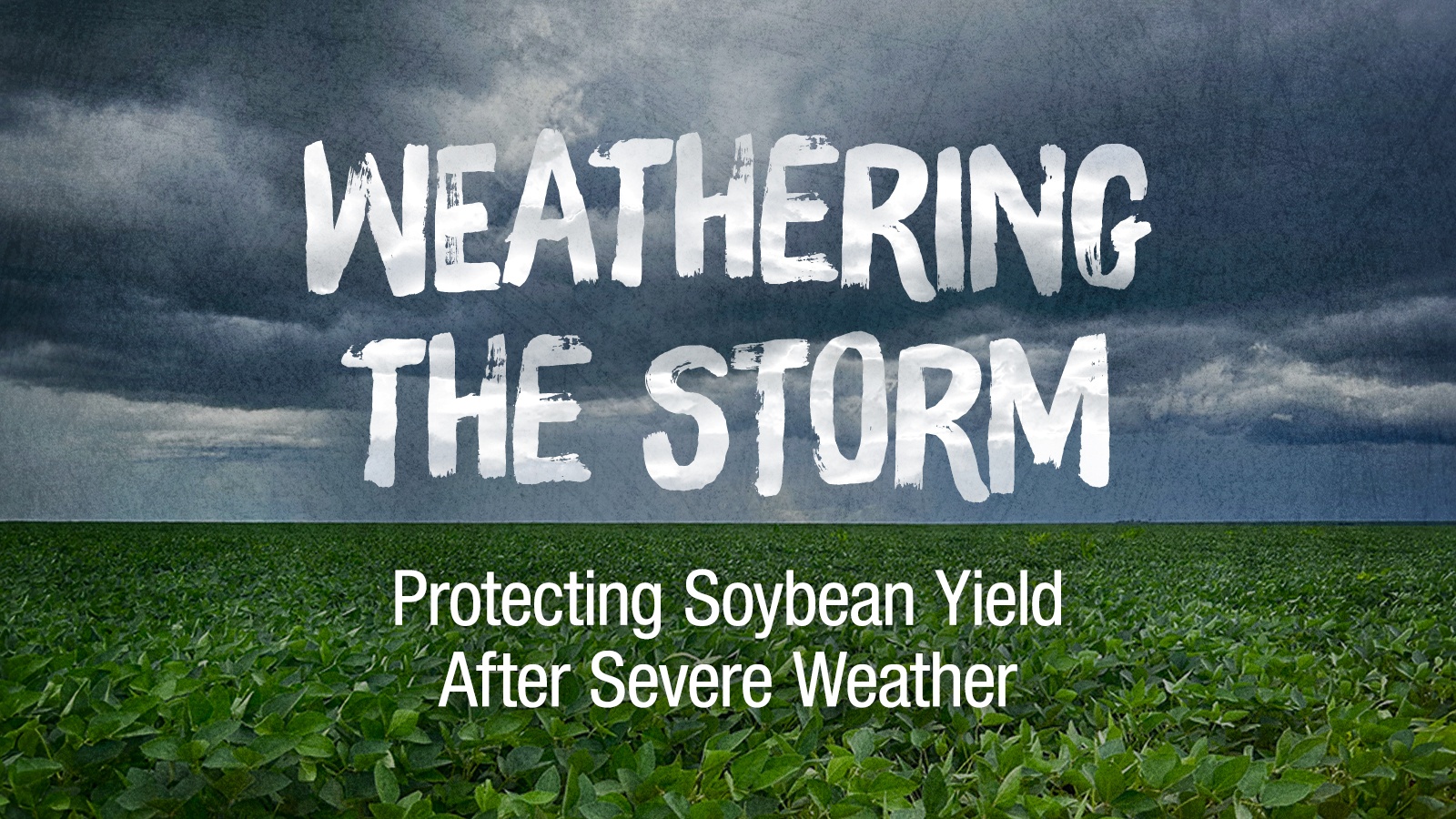
Weathering the Storm: Protecting Soybean Yield After Severe Weather
The weather forecast is out of your control, but your response isn’t.
3 Min Read
There are plenty of variables you can manage throughout the growing season, but the weather isn’t one of them.
Whether it’s extreme heat, hail, derechos or drought, severe weather can threaten soybean yield at nearly every growth stage. While no one can prevent extreme conditions, the management decisions you make before and after a weather event can play a major role in minimizing losses and protecting yield potential.
When Weather Takes a Toll
Soybeans are resilient, but every type of severe weather can take a bite out of yield. How much yield is affected depends on the type of stress and when it occurs.
University of Wisconsin-Madison experts say this is one of the state’s warmest growing seasons, and the same goes for much of the Midwest. Extreme heat and drought can delay canopy closure, trigger flower and pod abortion, and reduce seed fill. At the other end of the forecast, excess rain, flooding or derechos can increase disease pressure, delay soybean development, and contribute to soil compaction.
Growth stage matters too. Some soybean fields can recover from early-season stress, especially if favorable growing conditions return. However, stress occurring during the reproductive stages could potentially have larger yield consequences. When multiple weather challenges stack up, your bottom line can take an even bigger hit.
The Unseen Impacts
Immediate damage like broken soybean stems after a severe weather event may be easy to spot at first, but some of the biggest yield threats develop days or even weeks later.
Prolonged wet weather can leave fields with saturated soil, creating optimal conditions for disease, including Phytophthora root and stem rot and white mold. Flooding can lead to root suffocation and soil compaction, limiting the plant’s growth even after fields dry.
Assess Before You Act
When the weather turns, every management decision matters. While it’s important to evaluate fields carefully, it’s just as important to give your crop the chance to recover on its own before taking major action.
Especially for severe weather like hail, University of Nebraska-Lincoln experts say to wait seven to 10 days before making significant changes. Giving the crop a waiting period after a storm provides the chance for the soybeans to recover before acting on decisions. The last thing you want to do is overcorrect and add unnecessary inputs without improving your end-of-season outcome.
Protect Yield Potential
Once the weather clears, your focus should shift to protecting remaining soybean yield potential. Replanting may not be a practical option for your operation, so removing any additional stressors is key to helping your crop finish the season as strong as possible.
Continue scouting throughout the season in case signs of disease, insect activity and weed pressure pop up. Track university and extension updates for any pest pressure alerts or response recommendations. Identifying these issues early can help prevent a weather-related setback from becoming a larger problem later in the season.
Looking ahead, consider whether your current seed selection aligns with the weather challenges your operation faces most often, as some soybean varieties handle specific stressors better than others. Work with a trusted agronomist or your local Syngenta sales representative to fine-tune any management strategies for this season and beyond.
Bottom line: Weather may be unpredictable, but informed management decisions can help you protect soybean yield potential and position fields for success, no matter what the forecast brings.

RECOMMENDED FOR YOU