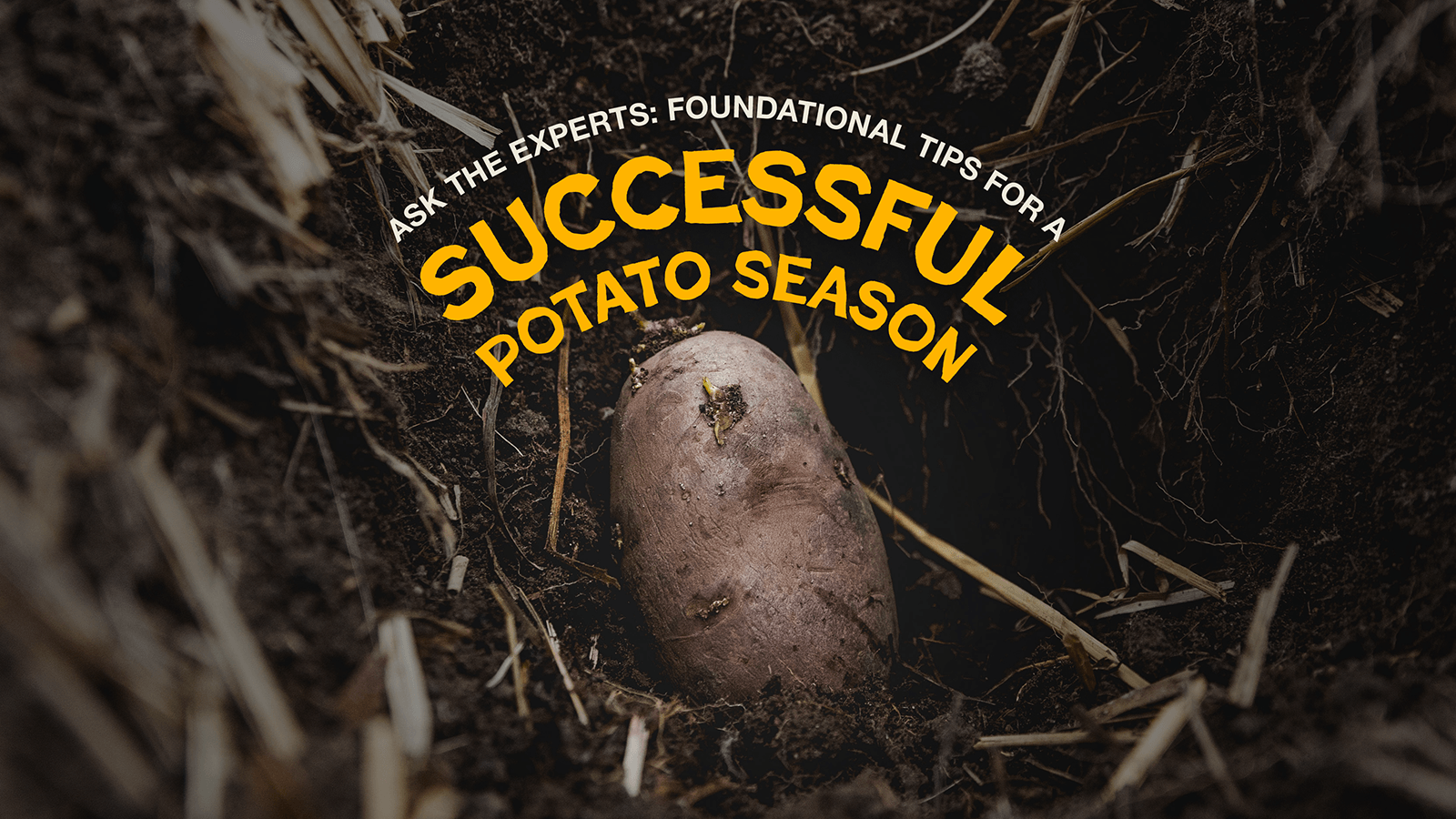
Ask the Experts: Foundational Tips for a Successful Potato Season
Early-season decisions can shape potato crop performance — it all starts with seeds and soil.
6 Min Read
In potato production, a successful season starts long before the crop emerges. Before planting begins, growers should consider field history and evaluate drainage, seed quality and soil temperature. These earliest weeks of the season can shape everything from stand establishment and plant health to tuber quality and harvest potential. Yet some of the challenges growers face begin belowground, where seedborne and soilborne diseases can quietly threaten crop performance before visible symptoms appear. Kiran Shetty, Ph.D., technical product lead at Syngenta and known throughout the industry as the ‘Spud Doctor’, shares expert advice on the importance of early-season disease management, identifying hidden risks and building a solid foundation for potato production.
Q: When you look at the most successful potato crops you’ve worked with, what do growers do before or at planting that helps set the stage for a successful season?
A: Early-season success is driven by multiple factors including seed quality, soil conditions, fertility, and disease management. The most successful potato growers start with a clear plan before planting, focusing on three areas:
- End use and quality goals: Know whether the crop is intended for seed, fresh market or processing, and understand the quality parameters and contract requirements that should guide in-season management decisions.
- Field and agronomic history: Review soil type, field history, previous crops, crop residue, prior crop protection products, weed, insect and disease pressure, drainage, adjacent fields and any available digital field data.
- Season-long logistics: Plan field mapping, access roads, irrigation layouts and equipment access early so in-season management runs smoothly.
There’s an understanding among agronomists: If you don’t start well, it’s a challenge to finish well. That’s why early-season crop health is so important.
Q: Why is early-season crop health so important in potatoes, and how can decisions made soon after planting impact yield and tuber quality later in the season?
There’s an understanding among agronomists: If you don’t start well, it’s a challenge to finish well. That’s why early-season crop health is so important — and why strong cultural practices, targeted crop protection products and proactive management can help reduce early risks and support stronger yield potential.
Early crop health starts with:
- Protecting the seed and making sure it produces a healthy plant: Growers must plan for good seed and seed care to get the crop out of the ground.
- Protecting the emerging root and shoot systems: Having a better understanding of soilborne pathogens by determining the source, symptoms and infection process can help growers prepare to prevent those pathogens, which ultimately protects early plant establishment and root health.
- Adjusting for environmental extremes: Conditions that are out of our control (like temperature and moisture) play a big role in the development of soilborne diseases early in the season, so taking steps to mitigate their effects can help minimize negative impacts.
Q: What are some of the biggest early-season threats to potato health that growers should be thinking about before they become visible in the field?
A: The adage, ‘You can’t see what you can’t see’, undoubtedly applies to early-season, belowground threats. Detecting these threats ahead of time is a challenge, and the uncertainty can pose problems later down the line.
The big wild cards for growers are seed and soilborne pathogens. Seeds can carry latent infections (that you can’t see) of pathogens like Fusarium, Rhizoctonia and Pythium. Similarly, soil can carry hidden, inherent inoculum of diseases like pink rot. Some of these threats can impede crop emergence early. Some symptoms may not appear until later as the crop advances, affecting crop health, yield and quality. A disease like pink rot is difficult to manage once it becomes established, which is why growers need to anticipate the risk before it shows up in the field. In production agronomy, ‘too late’ is never a good place to be — so it pays to plan ahead.
Q: What signs or conditions tell you a field may be at greater risk for diseases like pink rot, Pythium or other Oomycete diseases?
A: Fields under a decent rotation program (three or more years) can lessen the problems associated with Oomycete pathogens. However, short rotations, bridging and contributing previous crops can harbor certain Oomycete pathogens and become a source for the current crop. For example, the pink rot pathogen (Phytophthora erythroseptica) has a resting stage called oospores. Under the right conditions, those oospores can produce zoospores, which can initiate infection early in the crop’s life cycle. The best indicator is to obtain field records, history of the pathogen in that field, or better yet, conduct a soil analysis to determine its existence. There is advanced Polymerase Chain Reaction (PCR) testing to identify problematic soil pathogens prior to deciding where to plant and what to do if it tests positive.
In addition, growers typically have a keen sense of their field conditions. Heavier and ill-drained soils, low lying areas, persistent water channels and pivot tracks in the field are high risk areas that favor pink rot, Pythium and other Oomycete diseases.
Q: As growers weigh input decisions carefully, why should disease management be viewed as an investment rather than simply a production cost?
A: Another agronomic adage asks: ‘Is it better to save money or is it better to make money?’ Input cost can be expensive, but a clear understanding of the risk, rewards and potential return on investment (ROI) can help keep growers in business for a long time, profitably. The operative word is ‘disease management’, and this term is not a blanket approach. Pink rot is difficult to control after its occurrence in the field. On the contrary, knowing the field history, preparing the soil and use of crop protection products helps fend off this disease and secure a profitable crop, both in yield and quality.
Q: How can growers build a strong foundation for potato disease management, and why does a proactive approach matter?
A: As previously mentioned, if we start strong, we have a good chance to finish strong. Increasing pressure from seedborne and soilborne diseases, coupled with variable weather conditions, makes early-season planning more important than ever. This is where effective seed care products and soil applied products can build the foundation of the crop. It’s often difficult to determine detrimental levels of seed and soilborne pathogens, because most of it happens underground. Applying protective products to the seed, in the soil or both can help growers start the season on the right path. In potato disease management, this beginning sequence of seed and soil protection is paramount for success.
Q: Where does Orondis® Gold DC fungicide fit within that foundational approach to potato disease management?
Because many damaging potato diseases, including pink rot and Pythium, originate in the soil and can affect the crop early in the season, protection needs to start at planting. Applied in-furrow, Orondis Gold DC fungicide helps protect the crop when it’s most vulnerable.
From there, Orondis Gold DC strengthens foundational protection through a combination of two powerful active ingredients — oxathiapiprolin and mefenoxam — which have different modes of action to provide preventative, residual and systemic activity against key Oomycete diseases. It’s also compatible with other in-furrow products, making it easy to incorporate into a comprehensive disease management program. When paired with an effective seed treatment like CruiserMaxx® Vibrance®, growers can establish strong disease protection at planting, which helps preserve crop quality and maximize yield potential in the long run.
Q: If you could leave potato growers with one piece of advice for starting the season strong and protecting yield potential, what would it be?
A: When it comes to seed and soilborne potato pathogens, do NOT cut corners. Growing a potato crop is a huge investment and protecting this crop from the get-go is mandatory.

RELATED PRODUCTS

RECOMMENDED FOR YOU