

Build a Strong Soil Biome
Use these soil health strategies to improve yield potential in your almond orchard.

To keep tree crops healthy from root to fruit, it’s crucial to monitor and maintain soil conditions that provide easy access to water and nutrients. This is especially important for almonds, which require roughly a gallon of water per nut.
Loose, loamy soil is ideal, and taking care to avoid working wet soil will help prevent compaction that could compromise roots. Trees stressed from an inconsistent delivery of water and nourishment will default to supporting their own survival at the expense of the crop.
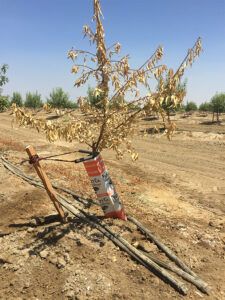
For example, stress from nutrient-deficient soil can undermine a tree’s microbiome by killing beneficial organisms that would otherwise support nutrient uptake and feeder root growth while fending-off soilborne pathogens. More than 24 hours of standing water can result in a steep increase in disease pathogens including Phytophthora — Greek for “plant destroyer” — a water mold that produces swimming spores to quickly spread its infection from one tree to another.
Adding organic matter to the soil and planting cover crops with strong, vigorous root systems are effective ways to help trees access the resources they need and fend off orchard-destroying stressors.
Study Shows Healthy Soil Enhances Yield Potential and Profitability
In a 2022 study of almond growers, the American Farmland Trust (AFT) found that growers who implemented soil health maintenance practices saw a yield increase valued at $46 to $968 per acre based on California average almond prices, and an increase in annual net income ranging from $99 to $1,502 per acre per year.
Not only does healthy soil improve yields and annual income, it can also boost return on investment by reducing input costs like fertilizers, machinery and fuel. Unhealthy soil can have the opposite effect. For example, if the soil is too compact, it may struggle to drain, negatively affecting the return on investment by requiring more inputs for the trees to receive the same fertilization.
Best Practices for Tree Nut Orchard Soil Health
The first step to improving soil health is determining what your soil needs — but it doesn’t stop there. Follow these practices to help maximize your tree nut production through proper soil health management:
- Assess your soil profile: Gauge tree root health by probing soil near the root line to determine what nutrients are needed. With a clear understanding of the soil profile and health of the root system, you’ll be better prepared to determine which specific amendments will best break up the soil for proper water retention and supplement missing nutrients as needed.
- Implement cover cropping: Planting cover crops between tree rows in the off-season can pay off in orchard water retention and biodiversity. These crops’ roots help improve soil structure, resulting in greater porosity, water infiltration and drainage, while also supporting beneficial organisms in the soil that help break it down and boost nutrient cycling.
- Add mulch: Mulching is an effective practice for enhancing water retention and regulating soil temperature. Mulch helps maintain consistent moisture levels in the soil, reducing the need for frequent irrigation. It also provides an insulating layer, keeping soil cooler in the summer and warmer in the winter, while benefiting root health and reducing stress on the trees.
- Apply a proper fungicide: A robust fungicide that protects against pathogens and supports overall plant health is a must to maximize tree nut production. Orondis® fungicide significantly reduces Phytophthora propagule counts while also improving root health and encouraging water and nutrient uptake. This is especially important for young trees with developing root systems that are more susceptible to disease.
Maintaining healthy soil is crucial to unlocking consistent profitability and orchard longevity.

3 Min Read
- Healthy soil gives almond trees steady access to water and nutrients — which is essential for preventing stress that limits yields.
- Adding organic matter, cover crops and mulch can boost root health, improve water infiltration and build a stronger orchard microbiome.
- In a 2022 study, almond growers using soil health practices saw yield gains up to $968 per acre and a 459% return on investment.





More Articles About Field Insights



RECOMMENDED FOR YOU