


Citrus’ Biggest Challenge: Asian Citrus Psyllid
Explore insecticides that complement integrated pest management programs and protect your citrus groves.

American citrus groves are under attack from a range of damaging pests. Among the many threats eating away at your marketable citrus yields, including mites, citrus thrips and leafminers, one looms above the rest: Asian citrus psyllid (ACP), the industry’s biggest enemy.
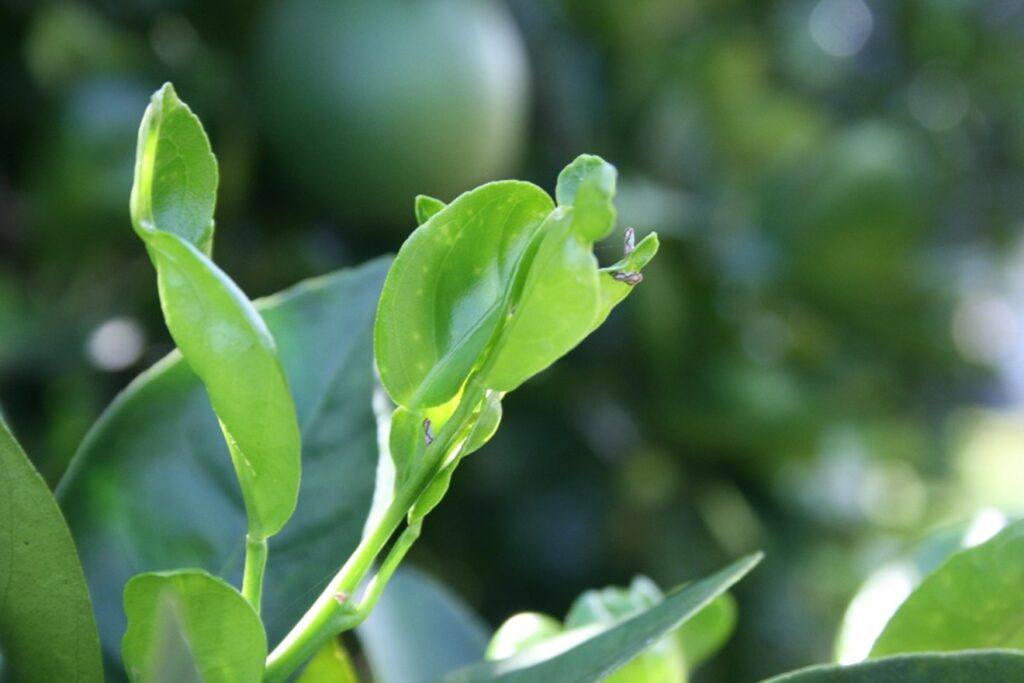
ACP is an invasive species that attacks all varieties of citrus. It arrived in Florida in 1998 and touched down in California just 10 years later. Females lay eggs within the folds of the citrus tree’s feather flush. All growth stages of ACP prefer to feed on the soft, unfurled leaves, injecting a salivary toxin that causes new leaf tips to burn back.
This invasive insect packs a one-two punch with its destruction. In addition to direct feeding damage, ACP vectors the deadly bacteria that causes Huanglongbing (HLB), or citrus greening disease, also known as the world’s most devastating citrus disease.
Identify Asian Citrus Psyllid and Citrus Greening
Adult ACP have mottled brown wings and range from 3 – 4 mm in length. Nymphs and adults have a whitish, waxy secretion on their bodies that gives them a dusty appearance. Nymphs are harder to spot but leave behind similar excretions on citrus leaves.
Infected trees may remain asymptomatic and act as a source of bacteria for other trees for months. When trees begin showing symptoms, there can be a wide variety, including mottled leaves, yellow shoots, defoliation, a 50 – 75% reduction in root function, fruit drop and shoot dieback. Infected trees also produce misshapen, bitter, unmarketable fruit.
Once infected, young trees can die shortly after initial infection, while older trees can be killed outright within 7 to 9 years, according to the University of California Integrated Pest Management Program.
Control ACP and Other Citrus Pests
While the outlook may appear grim when battling ACP, powerful insecticides can help turn the tide.
Zivalgo™ insecticide, powered by PLINAZOLIN® technology, introduces a novel mode of action (IRAC Group 30) that delivers consistently high efficacy and long-lasting, broad-spectrum control of a wide range of insects, including ACP.
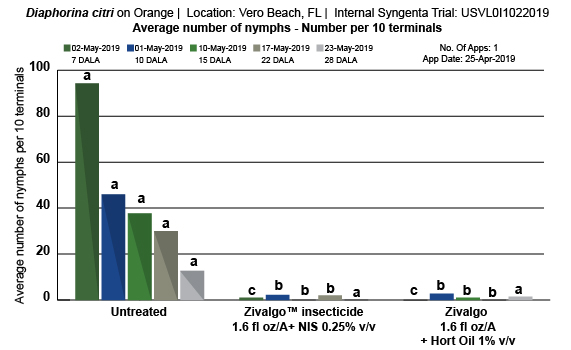
Zivalgo is a game-changer when it comes to controlling insects like ACP, mites, thrips and more in citrus crops. It acts by contact and ingestion to cause rapid feeding cessation after uptake. Its formulation remains stable on the leaf surface for extended periods with its rugged durability and rainfastness, giving you more application flexibility. Zivalgo complements integrated pest management programs, providing a robust tool for U.S. citrus protection moving forward.
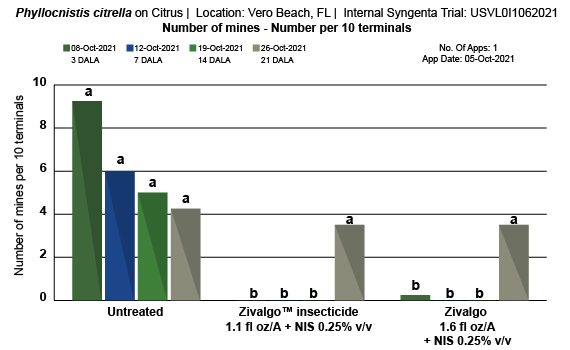
Find out how Zivalgo can help you protect your citrus crops from ACPs, leafminers, thrips and more. For additional information, reach out to your Syngenta representative.

3 Min Read
- Asian citrus psyllid causes direct feeding damage to citrus trees and introduces the bacteria that causes deadly citrus greening.
- Citrus greening can kill trees in a matter of years and has no cure; prevention is key.
- Integrated pest management programs, including effective insecticides like Zivalgo™, can help protect citrus groves.





More Articles About Field Insights



RECOMMENDED FOR YOU


3 Min Read