


Control Thrips to Boost Onion Yields
Managing these small but mighty insect pests can help protect crops by preventing feeding damage and limiting virus transmission.
Western flower thrips and onion thrips are small but mighty annual challenges for growers. Ranging from 1.3 to 1.5 mm in length, thrips are a destructive force despite their stature, robbing growers of their yield and profit potential every year. They thrive in warm and dry conditions, reproduce rapidly and have developed resistance to several existing chemistries.
Know the Signs of a Thrips Infestation
Recognizing the signs and symptoms of thrips infestations early is necessary to prevent populations from getting out of hand in your onions. Vigilant monitoring and early detection inform timely intervention that can set you up for long-term success.
Thrips can be hard to spot without the help of a hand lens. In both species, adults have pale coloration and two pairs of wings; immature thrips have no wings but similar body shapes as their adult counterparts.
According to the University of Wisconsin-Madison Division of Extension, female thrips can reproduce asexually and typically lay their eggs on the undersides of leaves. Larvae mature quickly and feed actively throughout their growth during the summer months. Thrips produce multiple generations every summer, multiplying their impact on onion crops.
Both adult and immature thrips feed on young leaves by extracting cell contents from the leaf walls. Feeding damage can be identified as blotches on the leaves or as whitening of the leaves, often leading to leaf curling and slowed growth.
Onion thrips specifically can also act as vectors for viruses in onions, such as the iris yellow spot virus. This virus is known to cause lesions in developing onion plants, leading to a reduction in yield quality potential. The combination of potential virus transmission and feeding damage amplifies the risk of thrips infestations.
Prevent Thrips Damage
Thrips are a growing challenge for growers, but Vertento® insecticide is available to protect against both species of thrips with a powerful active ingredient.
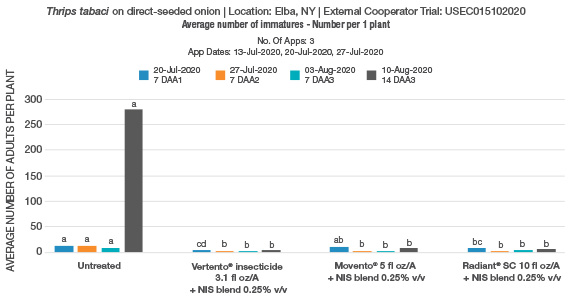
With the incidence of insecticide resistance in thrips on the rise in some areas, new modes of action are critically important. Vertento introduces a novel active ingredient belonging to IRAC Group 30, offering a solution for resistance management and helping take the stress out of thrips control.
For additional information about controlling thrips, insecticide solutions and resistance management, reach out to your Syngenta representative.

2 Min Read
- Western flower thrips and onion thrips are one of the most serious threats to onion yields.
- Onion thrips can vector the iris yellow spot virus, leading to reduced yield quality potential.
- Vertento® insecticide can help growers manage thrips populations and protect yield potential.



More Articles About Field Insights

RECOMMENDED FOR YOU