

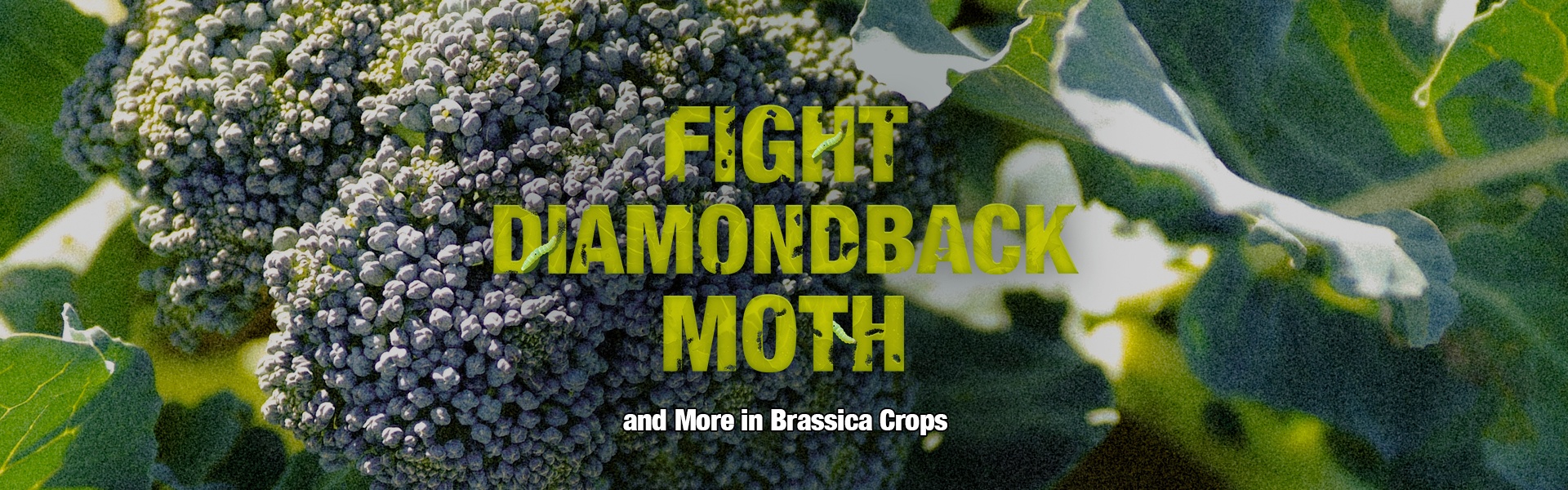
Fight Diamondback Moth and More in Brassica Crops
Incipio insecticide offers growers a new option to protect brassica crops from diamondback moth and other insect pests.
Understanding pest pressure is key to producing any crop, and brassica vegetables are no exception. Insect pests such as diamondback moth, cabbage looper and imported cabbageworm can cause significant damage to brassica crops like broccoli, brussels sprouts, cabbage and more.
Defend Brassica Crops Against Diamondback Moth
Of the many insect pests brassica growers face, diamondback moth (DBM) may be the most challenging. Bringing new meaning to the phrase “small but mighty,” DBM larvae measure less than half an inch in size but can inflict serious damage to brassica crops, leading to devastating losses, reduced crop quality and increased control costs. Studies estimate that DBM costs the U.S. economy $1-2 billion annually.
The most sinister quality of DBM is the fact that it has quickly developed resistance to many available insecticides. The Journal of Economic Entomology cites that DBM was able to develop a high level of resistance to chlorantraniliprole within just three years of the chemistry’s introduction. The number of documented cases of resistance for DBM is greater than any other arthropod, earning it the title “the worst insect pest of brassica vegetable crops” by Cornell University’s College of Agriculture and Life Sciences.
DBM damage can vary according to the age of the crop and pest. Young larvae tend to feed on the lower leaf surface of more mature plants, leaving the upper epidermis of the leaf intact and giving it a distinct “windowpane” appearance. If uncontrolled, it can completely remove all foliar tissue of the plant besides leaf veins.
Older DBM larvae prefer to feed at the crowns or growing points of young plants, chewing on floral stalks and flower buds. This can cause severely stunted growth and disrupted head formation in cabbage, broccoli and cauliflower. The presence of larvae and contamination in florets will lead to complete rejection of produce.
Despite these challenges, new chemistries can improve the outlook for DBM control. Incipio™ insecticide designed to help growers farm with greater peace of mind and assist with resistance management.
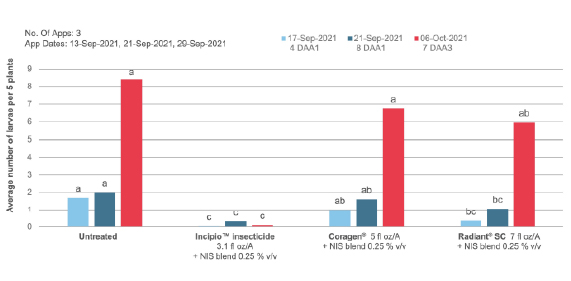
Incipio provides consistent foliar pest protection in vegetable crops, delivering high efficacy and long-lasting, broad-spectrum control. This innovative insecticide introduces PLINAZOLIN® technology, a novel mode of action (IRAC Group 30) that acts by contact and ingestion, modulating the GABA receptor of the pest’s nervous system and causing rapid feeding cessation after uptake.
Control Additional Brassica Insect Pests
Incipio complements integrated pest management programs to help control other brassica insect pests.
- Cabbage loopers damage crops during the larval stage. They have a pale green appearance with distinct white stripes down each side and four light stripes down the back. Mature larvae reach about 1.5 in in length. According to Michigan State University, this pest initially chews only the underside of leaves before they eventually create holes through the entire leaf.
- Imported cabbageworms are most distinguishable by their fuzzy gray-green appearance. The feeding damage left behind by imported cabbageworms is similar to cabbage loopers, but Clemson University Cooperative Extension states that imported cabbageworms cause about two-thirds less damage to brassica crops than cabbage loopers.
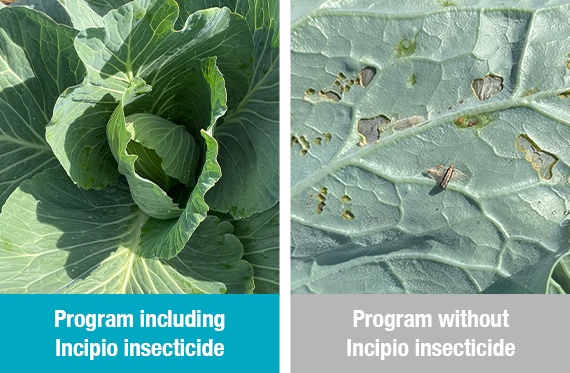
Clemson University Cooperative Extension suggests implementing cultural practices to keep brassica crops free of cabbage loopers and imported cabbageworms. Key cultural practices include managing weeds to minimize protection and overwintering sites for these pests. Additionally, remove and destroy crop residue as soon as the crops have been harvested to eliminate any remaining pests.
In addition to managing weeds and removing crop residue, the University of Wisconsin – Madison Extension recommends scouting crops weekly, especially for caterpillars. Even if no feeding damage is apparent, check for eggs that will hatch into small caterpillars several days to a week later.
Incipio complements these cultural practices as part of an integrated pest management program to help enhance control of the most challenging brassica insect threats.
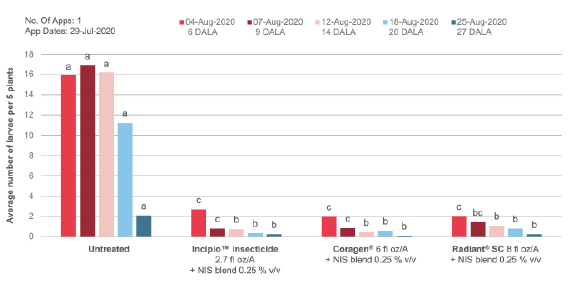
For additional information about tackling tough insect pests, reach out to your Syngenta representative.

4 Min Read
- Diamondback moth earned the title of “worst insect pest of brassica vegetable crops” because it developed resistance to many available insecticides.
- Incipio™ insecticide helps control a wide variety of pests that plague brassica crops, including diamondback moth, cabbage looper and imported cabbageworm.
- Incipio offers brassica growers an important new tool for resistance management.



More Articles About Field Insights



RECOMMENDED FOR YOU