

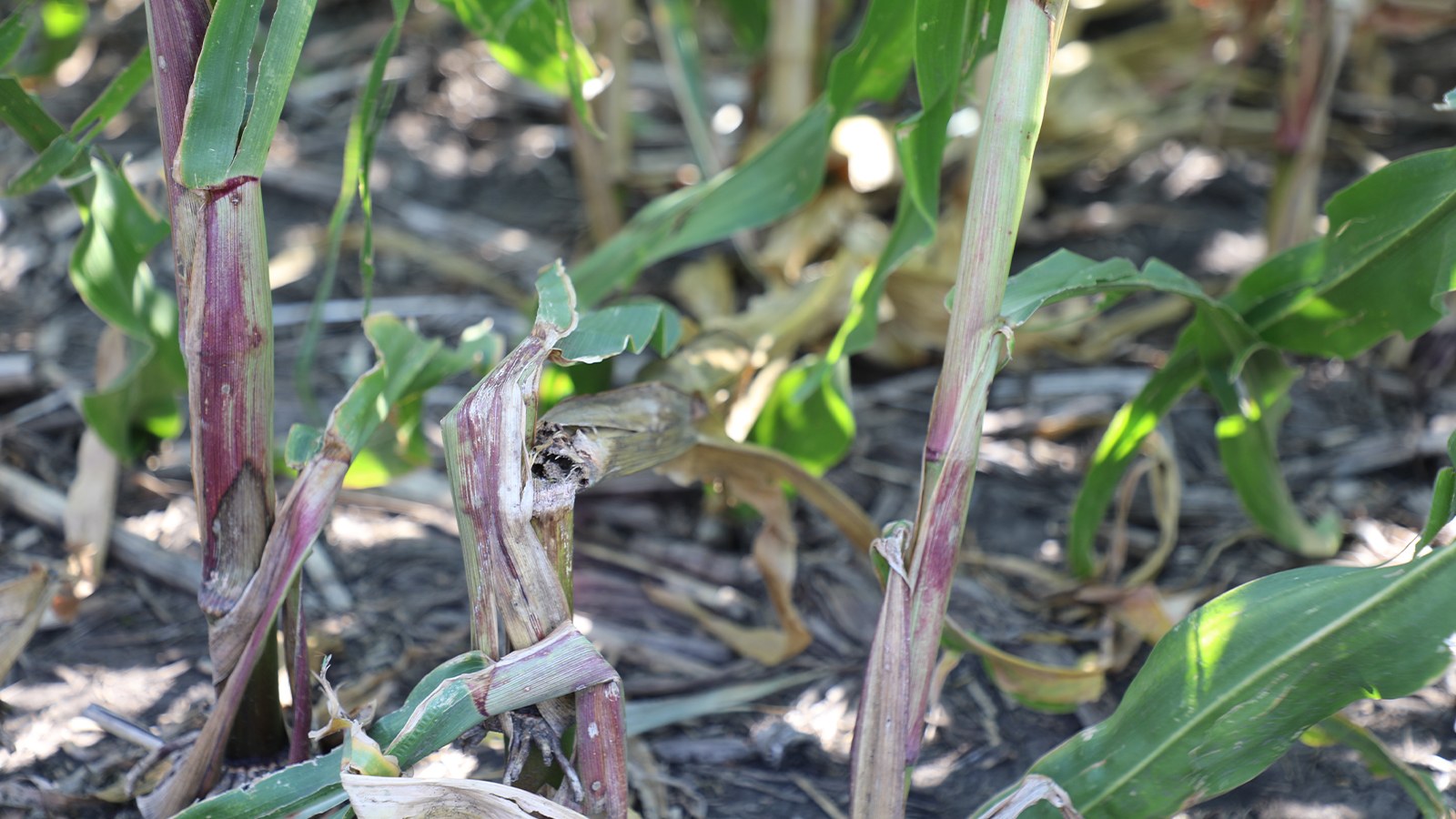
Downed corn at a Syngenta Grow More Experience Site. Dixon, IL. September 2020.
Prevent Yield Loss With Five Tips to Harvest Lodged Corn
Lodged corn can be salvaged with careful planning and the right equipment.
3 Min Read
Lodged corn. A consequence of severe weather, poor crop conditions, or a combination. It’s also another obstacle between growers and a smooth end to the season.
Severe lodging risks yield potential and complicates harvest. One way or another, however, downed corn must be harvested. Keep these five tips in mind to harvest lodged corn safely, carefully and without compromising yield.
Tips to Harvest Lodged Corn
1. Prioritize acres with severe lodging.
That means scouting frequently and knowing your fields come harvest time. Lodged corn should be harvested as soon as it’s ready; Otherwise, another bout of severe weather or stalk disease can worsen lodging.
2. Set up for success by resetting at each field.
It’s important to reset the combine before entering a field, especially when harvest conditions vary across fields and dates. For example, you may need to reposition gathering chains to grip stalks more aggressively, reduce fan speed or adjust other settings on a field-by-field basis.
3. Slow down and harvest against the grain.
If weather allows, avoid speeding through harvest. Rushing quickly through the fields is an inefficient way to harvest lodged corn. Slow your combine speed to reduce the risk of missed ears. Make sure you harvest in the opposite direction of the way corn is leaning to reduce losses.
4. Organize the right equipment before harvest begins.
Make sure your combine is equipped with the proper reel to handle root or stalk lodging. The ideal attachment will lean out ahead of snouts to pick up the plants and guide them into the combine. If you can avoid it, don’t over-rely on rentals. Reels can become scarce in affected regions after widespread weather events like the 2020 derecho. Investing in your own equipment now can help you avoid a headache later.
5. Keep quality in mind.
Quality issues are inevitable when harvesting corn that’s been lying on the ground. Downed corn ears can fall victim to a range of toxins. Be on the lookout for additional mold and grain quality loss. Harvesting early can help make sure stalks are in the best possible condition.
No matter what plan you develop for harvesting lodged corn, don’t get frustrated with the time and effort required. Proper safety practices should always be put in place, as rushing through harvest can be dangerous and counterproductive. Careful preparation can help salvage much of your yield.
Preventing Lodged Corn
If you saw significantly more lodged corn this year, ask yourself the following questions:
1. Did I change my approach to nutrient management this year? Excessive nitrogen applications at the end of the year or nutrient imbalances throughout the growing season can weaken stalks. Consider testing your soil if you suspect a problem.
2. Could my plant population have contributed to lodging? Higher seeding rates can lead to increased competition for nutrients. This may result in thinner, weaker stalks that are prone to stalk and root lodging.
3. Was there a soil moisture issue? Drought conditions can lead to increased crop damage during harvest; soft soil with too much moisture can increase the risk for machine damage.
4. Did my crop protection plan keep up with disease and pests this year? Gaps in your plan can leave corn vulnerable. Common foliar diseases like tar spot and Northern corn leaf blight can weaken stalks. Insect pests, especially corn rootworm, can contribute to root lodging. Weeds can increase competition for the nutrients needed to grow strong stems.
Multiple factors contribute to downed corn. Implementing crop rotation, planting resistant hybrids, and monitoring pests throughout the growing season are all strategies that can pay off at harvest. Beyond these, the right strategies to prevent lodging will depend on the specific factors affecting your fields.
Consider reaching out to your local Syngenta representative to see what might be missing from your plan.

RELATED PRODUCTS

RECOMMENDED FOR YOU