


Keep Thrips Away From Leafy Greens
Incipio insecticide can reduce thrips populations, minimize the risk of INSV virus transmission and protect yield potential.
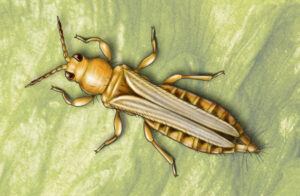
Leafy green growers — do you have a plan for Western flower thrips? These tiny, slender pests feed on the leaves of your lettuce, spinach and other leafy vegetables.
- Thrips puncture the epidermal layer of plant tissue and extract cell contents.
- Feeding damage results in stippling and discoloration.
- Cosmetic scarring and reduced crop quality render vegetables unmarketable.
- Heavy infestations lead to necrosis, costing yield and profit potential.
Thrips Threaten Lettuce, Spinach and More
Feeding damage isn’t the only threat thrips pose to lettuce crops. The Impatiens Necrotic Spot Virus (INSV), transmitted by western flower thrips, causes severe damage to crops. To make matters worse, traditional pest management practices are no match for the one-two punch of thrips and INSV.
According to the University of Arizona, the standard management practice used to involve allowing thrips to build up on young vegetable crops before using two well-timed foliar insecticide applications to prevent feeding damage on marketable yields.
Although this method was effective for years, INSV and resistance development have changed the landscape of thrips management in leafy vegetables.
INSV Transmission in Leafy Crops
The University of Arizona found that leafy INSV infections can occur in two ways:
- Primary infection or spread can occur when INSV-infected adults from an outside host source migrate into your fields, feed on the crop and transmit the virus to otherwise healthy plants.
- Secondary infection or spread occurs when thrips larvae acquire INSV by feeding on an infected plant (either the crop itself or nearby weeds), develop into infected adults and transmit INSV throughout your fields.
Scouting Reminder: Only larvae can acquire INSV, and only adult thrips can transmit the disease to your crops.
How to Control Thrips and Manage the Spread of INSV
The presence of INSV demands a more proactive approach to thrips management to prevent the introduction and spread of the virus in your leafy crops. The University of California recommends an integrated program including selective insecticides; however, thrips have already developed resistance to several available options, leaving growers uncertain about the future.
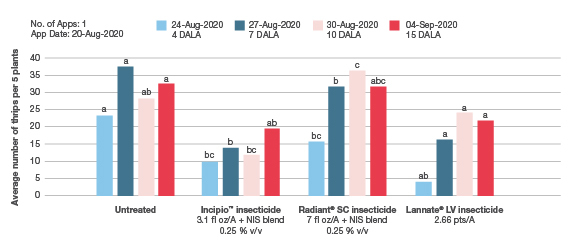
The answer? Incipio™ insecticide, powered by PLINAZOLIN® technology. Through a novel mode of action, Incipio provides key advantages that can help turn the tide of thrips management, including:
- Consistent, long-lasting control of thrips.
- A next-generation active ingredient that works on the GABA receptor of insect nervous systems to deliver control of immature and adult thrips.
- No known resistance or cross-resistance, making Incipio an important option for resistance management.
- A formulation that can withstand a range of weather conditions.
- Residual control to protect against thrips and INSV.
Learn more about how Incipio can help you grow with confidence by preventing the spread of disease-causing pests in your leafy vegetables today. For additional information, reach out to your local Syngenta representative.

3 Min Read
- Thrips puncture leaves and extract nutrients, resulting in stippling, discoloration and cosmetic scarring of leaves.
- Heavy thrips damage can render leafy vegetables unmarketable, costing yield and profit potential.
- Incipio™ insecticide, powered by PLINAZOLIN® technology, introduces a novel mode of action to control thrips and help with resistance management.



More Articles About Field Insights



RECOMMENDED FOR YOU



3 Min Read