

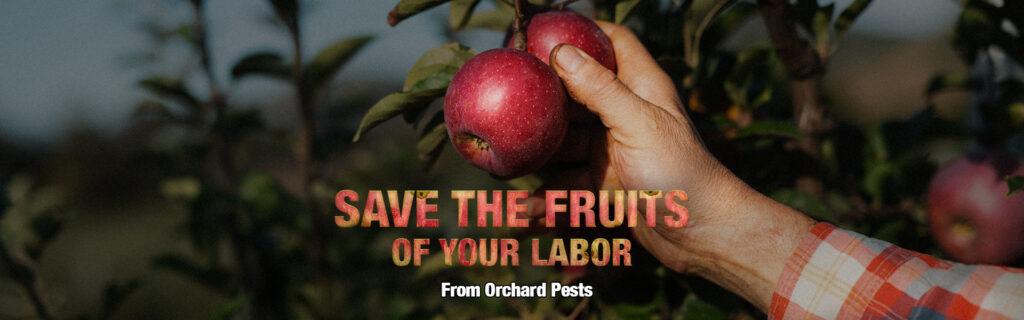
Save the Fruits of Your Labor from Orchard Pests
Protect orchards from insect pests like codling moth, plum curculio and thrips with a robust insecticide program.
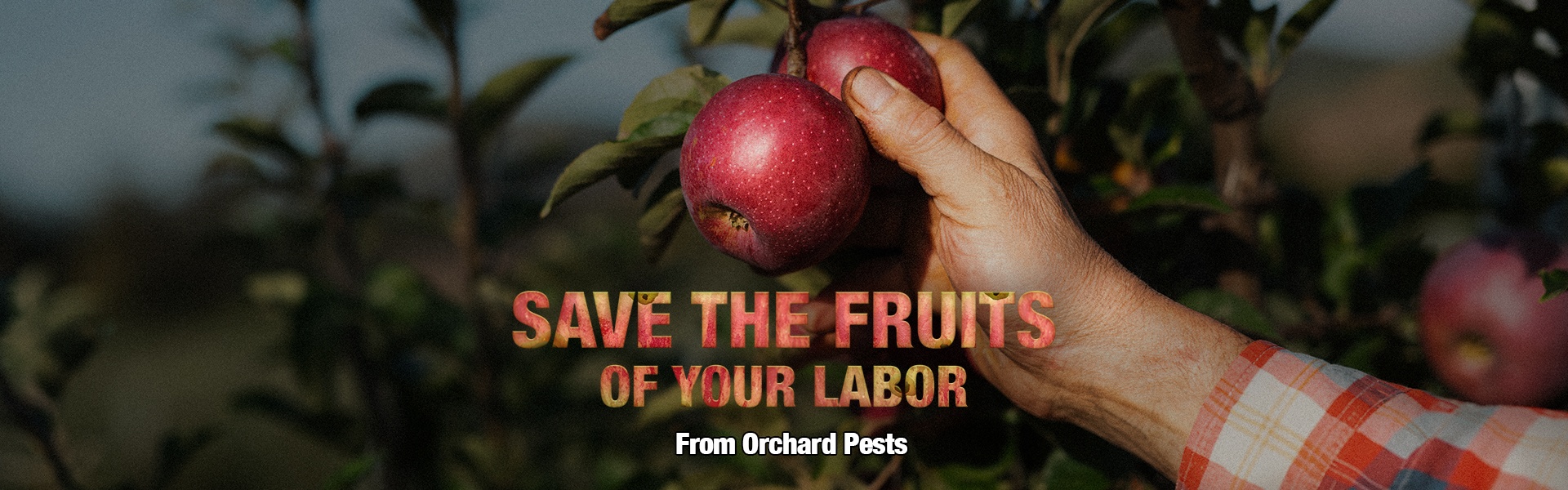
Few things are certain in farming, but there’s one thing you can count on to make an appearance in your orchards: insect pests. Codling moth, plum curculio, Oriental fruit moth and thrips are persistent yield-robbers that pose unique management challenges to pome and stone fruit growers.
Before you plan your defense, learn to identify these pests.
How to Identify Codling Moth
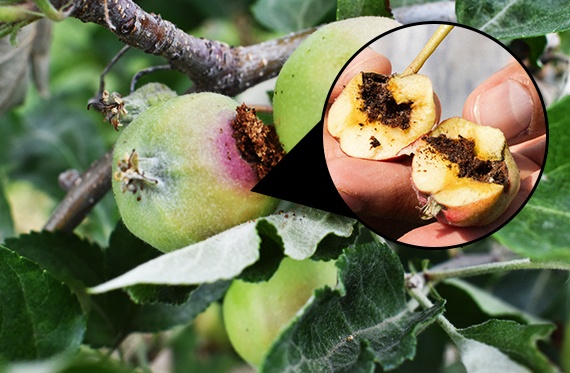
Codling moth is a problematic pest in pome fruit orchards, particularly in apples. Larvae burrow into fruit, creating reddish-brown tunnels into the core. Codling moth damage can rapidly reduce yields.
- The easiest way to identify codling moth is to scout for brown, granular piles of excrement, also called frass, plugging the entrance of holes on the surface of the fruit left by larvae.
- After maturity, larvae leave the fruit to pupate in cocoons on the base of trees. Look for cocoons among cracks in the tree bark.
- Adults are small, brown- and gray-banded moths about a half inch long.
The only control option once codling moth larvae have entered the fruit is to pick and dispose of the fruit.
How to Identify Plum Curculio
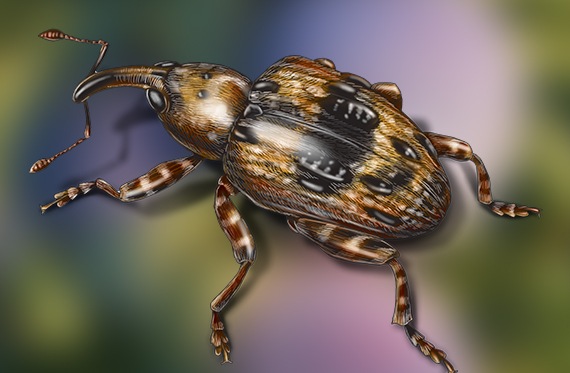
Plum curculio is another challenging insect pest found in pome and stone fruit trees. Apples, pears, tart cherries, plums, apricots and peaches are all vulnerable to this pest. Damage from plum curculio is a result of egg laying activities. If eggs develop into larvae, they feed on the inside of the fruit, leading to internal damage and reducing marketable yields.
- Plum curculio is a weevil with a small body, approximately 0.25 inches in length.
- They are usually a combination of several colors, like brown or black, and they’re characterized by their curved snout and lumpy appearance.
- Look for crescent-shaped scars left on fruit as it grows.
Cultural control for plum curculio involves shaking branches to remove adult weevils and bagging fruit.
How to Identify Thrips
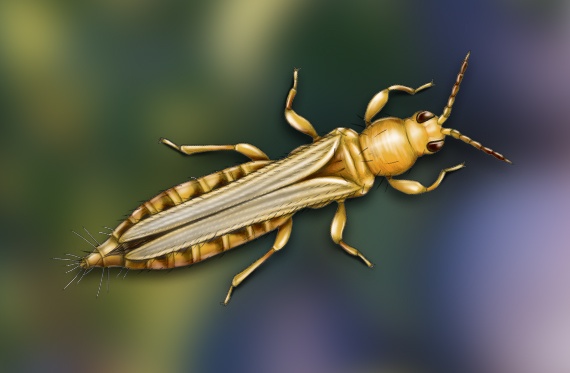
The most common species of thrips in stone fruit is western flower thrips. Feeding damage from thrips can rapidly downgrade fruit to U.S. #2 grade, impacting your bottom line.
- Adult thrips are pale and small, reaching a maximum length of just 2 mm. They are difficult to spot without a hand lens, so focus your efforts on scouting for damaged fruit.
- Thrips feeding damage in peaches results in silvering and defuzzing of peaches in the weeks leading up to harvest.
Cultural practices to control thrips include preventing growth of weedy areas where thrips can overwinter.
Defend Stone and Pome Fruit Yields With Insecticides
Scouting for these pests can be a challenge as they are most active during dusk and dawn. While cultural controls exist for codling moth, plum curculio and thrips, many may be impractical or insufficient to control heavy insect pest pressure. Instead, incorporate cultural practices alongside the right insecticide to defend your marketable yields.
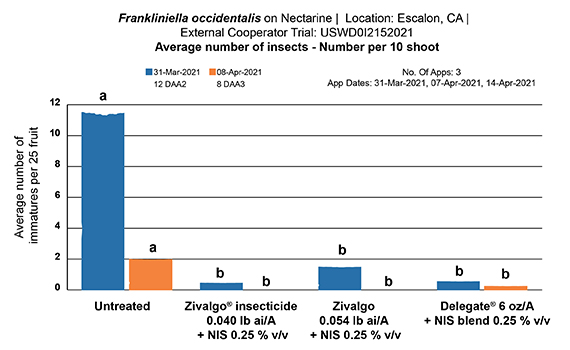
Zivalgo® insecticide with PLINAZOLIN® technology provides exceptional foliar pest protection in pome and stone fruit crops through its innovative mode of action. Zivalgo delivers consistently high efficacy and long-lasting broad-spectrum control of challenging pests.
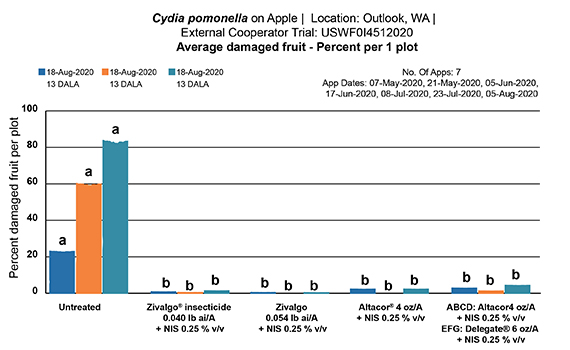
Its novel mode of action provides a new tool for resistance management, which is key when looking to protect pome and stone fruit trees from insects with increasing incidence of insecticide resistance, like thrips.
Learn more about how Zivalgo can help protect your pome and stone fruit crops from damaging insects today. For additional information, reach out to your local Syngenta representative.

4 Min Read
- Codling moth, plum curculio, Oriental fruit moth, and thrips are a persistent challenge for pome and stone fruit growers.
- Scout orchards for insect damage early and often; damage may appear before you spot pests.
- Zivalgo® insecticide provides robust protection against codling moth, plum curculio, thrips and more.



More Articles About Field Insights


RECOMMENDED FOR YOU