Field Insights
RED LEAF BLOTCH: An Invisible Enemy 🔎
RLB infects almonds early and shows its symptoms too late. See why prevention is your only option against this
destructive disease.
May 2026
| BY By Syngenta Thrive
2 Min Read

A Hidden Early-Season Threat
- Fungal leaf disease caused by Polystigma amygdalinum
- Infects young leaves early in spring Symptoms appear 35–40 days later
- No control possible once symptoms are visible
What Does RLB Look Like?
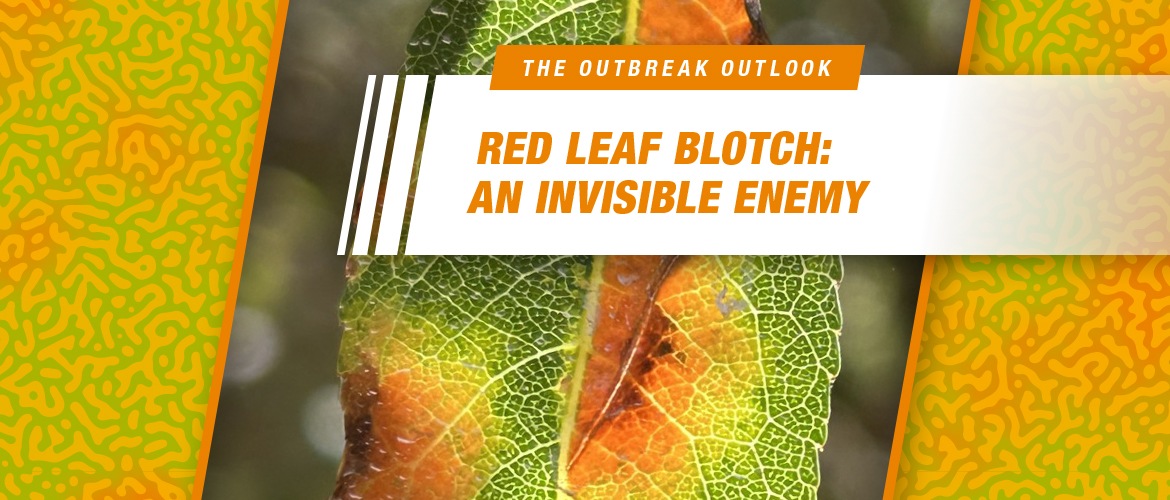
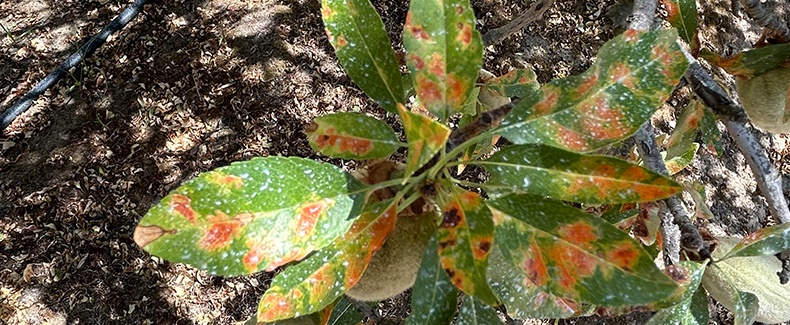
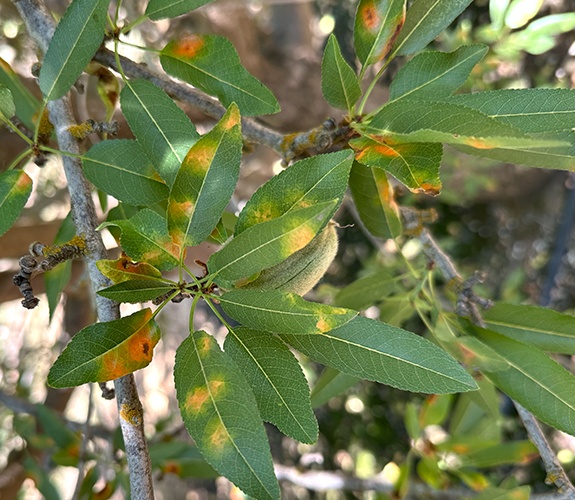
- Early Signs: Small yellow spots on leaf surface
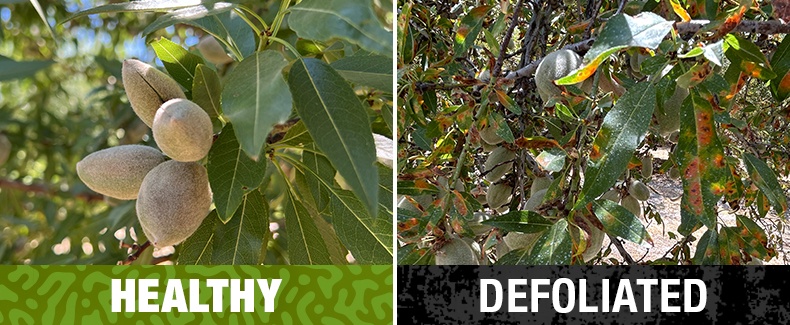
- Progression: Lesions enlarge and turn orange/reddish brown; blotches merge and cause leaf curling, scorching and early drop
- Impact: Weakens tree canopy and reduces photosynthesis
- Infected leaves fuel next year’s infections
Why RLB Detection and Treatment Matters
Early Infection Leads to Long-Term Damage
- Causes premature leaf drop
- Reduces photosynthesis and energy storage
- Stresses trees and reduces quality almond yields
- Risks future profit potential
Where is RLB?
New to the U.S. and Moving Fast
- Seen in Spanish orchards as early as 1927, with a historical presence in the Mediterranean and parts of the Middle East
- First detected in California in 2024, likely introduced through infected plant material
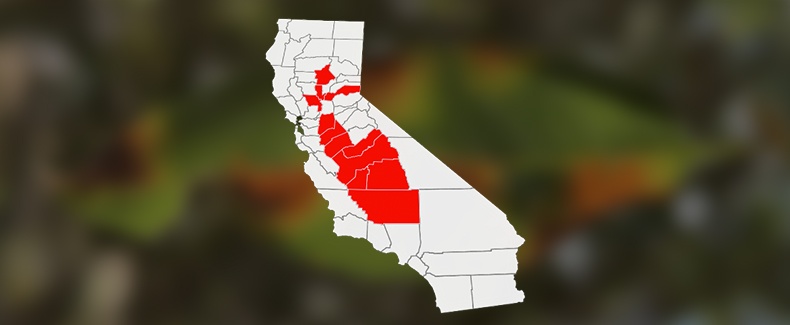
- Has spread quickly from Merced and Madera counties to all major almond-producing counties in California
- If you see RLB pressure this year, expect more next year!

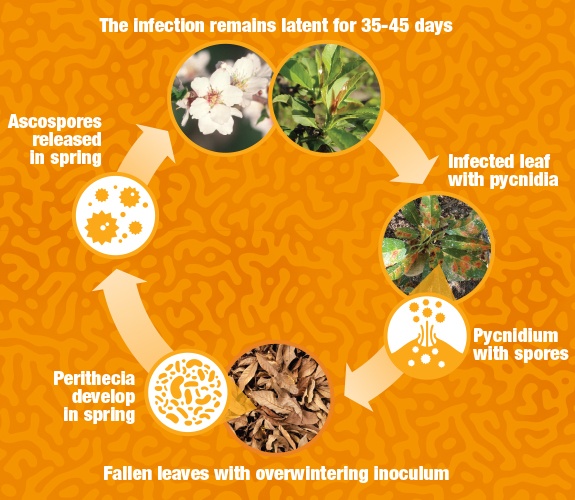
RLB’s Cycle Works Against You
- Overwinters in infected leaf litter Spring rain releases new ascospores at bloom
- Spores then infect new leaves, continuing its cycle
- Long latency period (35–40 days) hides infection until damage is already done
Why Prevention is Crucial
RLB is monocyclic, meaning there’s only one infection cycle per season — if you miss it, you miss your control window. Fungicides can’t cure infected leaves, and protection must be in place before infection.
An Integrated Approach Is Your Best Bet
Cultural Practices
- Managing infected leaf litter
- Speeding up leaf breakdown with zinc + urea
- Cleaning equipment between orchard passes
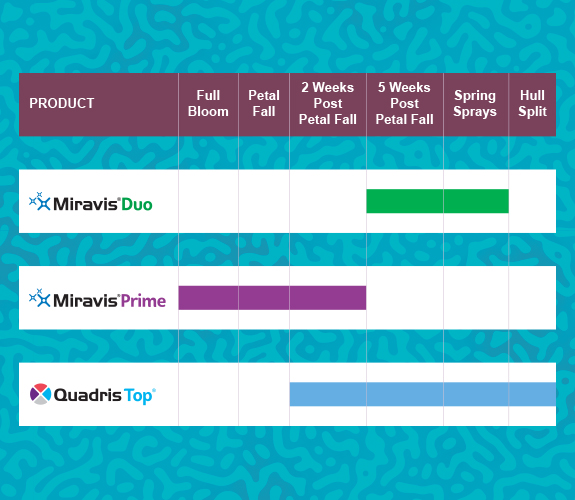
Critical Fungicide Timing
- Petal Fall: Apply Miravis® Prime fungicide now to dial up your RLB defense. This is a crucial step to help prevent infection!
- Post-Petal Fall: Apply Miravis Duo or Quadris Top® fungicide 2–3 weeks post-petal fall to help maintain RLB protection.
- Follow-Up Spray: For high-risk orchards, a third application is recommended (~5 weeks post-petal fall)

Early Action Helps to Protect Yield
Protecting almonds early with a powerful preventive fungicide program and smart management practices is a way to preserve tree canopy, support almond yield and your orchard’s longevity.
Share this story

More Articles About Field Insights

RECOMMENDED FOR YOU